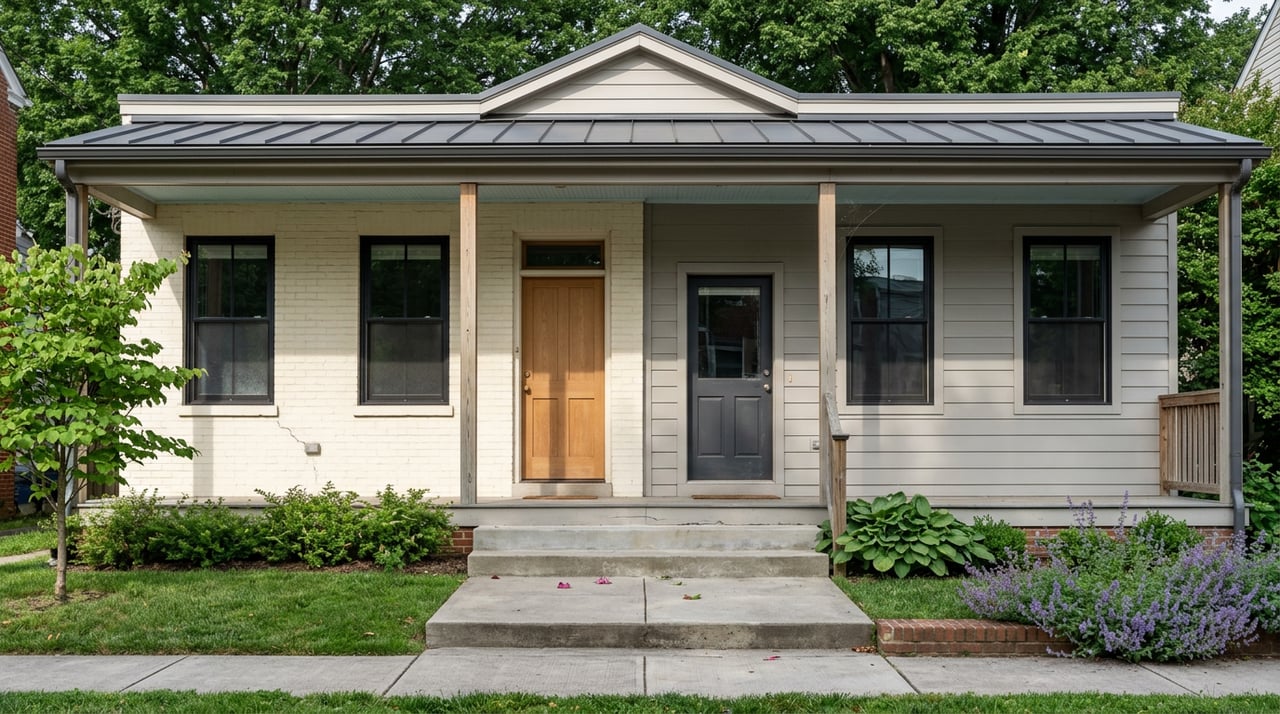
The Northampton County Inspection That Has Nothing To Do With Your Home Inspector
August 13, 2026
August 13, 2026
Picture two sellers in Northampton County, both listing homes for sale in the same week, both expecting a routine six-week close. One lives inside Bethlehem city limits. The other lives half a mile away, just over the line in Bethlehem Township, a separate municipal government with its own name, its own code office, and its own clock. Neither seller has any idea that the two governments treat the same kind of pre-sale inspection completely differently, and by the time they find out, one of them has already lost a week they didn't budget for.
That's the part of a Northampton County closing that catches people off guard. It isn't the structural home inspection buyers already expect. It's a separate, municipality-run inspection that many local governments require before a property can legally change hands, and the rules for it are not uniform across the county. They vary by borough, by township, and in some cases by which side of a street you happen to live on.
Bethlehem is a useful place to start because it illustrates the problem in miniature. The City of Bethlehem operates its own Housing Inspections Office under the city's Article 119 and Article 1731. Under that code, a seller or their agent has to contact the city within ten business days of listing the property for sale, and the resulting report on any uncorrected housing, building, safety, or fire violations gets attached as an addendum to the agreement of sale.
Bethlehem Township is a different municipality entirely, adjacent to the city but governed on its own. Its resale inspection ordinance, on the books since 1978, gives sellers only 48 hours from listing to request that same kind of report, not ten business days. A seller who assumes the city's timeline applies because they think of themselves as living "in Bethlehem" can miss that deadline before they've even had their first showing.
A few miles away, Hanover Township runs its own resale property inspection program under an ordinance dating to 2010. Inspections there are only conducted Monday through Friday between 9 a.m. and 1 p.m., a narrow scheduling window that can matter a great deal if a seller is trying to close inside 30 days.
The City of Easton takes a related but distinct approach, requiring a certificate of use and occupancy from the Zoning Administrator's office before a change in use or occupancy is legal, separate from a standard building permit process.
Here's the county-level comparison, based on what each municipality's own code or department page states:
| Municipality | Trigger point | Inspection window | What it produces |
|---|---|---|---|
| City of Bethlehem | Within 10 business days of listing | Scheduled by Housing Inspections Office | Violations report attached to agreement of sale |
| Bethlehem Township | Within 48 hours of listing | Scheduled by Code Enforcement Officer | Resale inspection report |
| Hanover Township | At listing, per ordinance since 2010 | Weekdays, 9 a.m. to 1 p.m. only | Report mailed to seller |
| City of Easton | Before change of occupancy | Scheduled through Zoning Administrator | Certificate of use and occupancy |
None of this is optional paperwork a seller can skip because it feels redundant with the buyer's own home inspection. It's a separate legal requirement tied to the specific municipality where the property sits, and Pennsylvania law does not standardize it. According to the Pennsylvania Association of Realtors, no state law or regulation requires any municipality to conduct one of these inspections at all. Some choose to, many don't, and the ones that do each write their own rules for timing, scheduling, and what triggers a violation.
The part that tends to worry sellers most is what happens if the inspection turns something up. Pennsylvania's Municipal Code and Ordinance Compliance Act, amended by Act 133 in 2016 and clarified further by Act 93 in 2024, puts real limits on what a municipality can do with those findings.
A municipality cannot flatly deny a use and occupancy certificate because of a violation discovered at resale. If the inspector finds something serious enough to be classified as a substantial violation, meaning a condition that makes the building unfit for habitation, the municipality is required to issue what's called a Temporary Access Certificate instead of blocking the transfer outright.
That certificate lets the new owner get into the property to make repairs. No one is allowed to live there while it's outstanding, but the sale itself isn't held hostage the way it might have been before the law changed.
The practical effect for someone buying or selling in Northampton County is this: a violation found during a municipal resale inspection adds a repair-and-reinspection loop to your timeline, not a dead stop. That loop still takes real days, sometimes weeks, depending on the nature of the fix and how quickly the specific municipality can schedule a follow-up.
For properties outside the boroughs and closer to Northampton County's rural townships, particularly the Slate Belt communities and the areas nearer Bangor and the Blue Mountain side of the county, there's a second inspection track that has nothing to do with any borough code office.
Homes on private well and on-lot septic fall under Pennsylvania's Sewage Facilities Act, known as Act 537, which requires a permit through a certified Sewage Enforcement Officer for any new system, repair, or in many municipalities, an inspection tied to a change in ownership. That process runs through the county's environmental health functions, entirely separate from whatever municipal code office is handling the resale inspection on the same property.
The county's own soil geography makes this more than a paperwork detail. The southern part of Northampton County sits on Great Valley limestone soils that drain well but carry karst vulnerability, meaning sinkholes are a real design consideration for a drain field. The Slate Belt running through the county's center has clay-rich soils derived from slate and argillite that often need engineered, non-standard septic designs. The Blue Mountain area to the north has thin, rocky soil over sandstone that presents its own siting challenges.
That variation is why a septic evaluation on one rural property can clear in days while a similar-sized home a few miles away needs a specialized design before anyone can even schedule the inspection. A buyer or seller with a septic system is effectively managing two separate government processes at once, on two separate timelines, and neither one waits for the other.
Before you list, confirm the exact municipality that holds jurisdiction over your address. Don't assume based on your mailing city. Bethlehem, Bethlehem Township, and Hanover Township are three different governments with three different resale inspection rules.
Look up that specific municipality's ordinance or call its code enforcement office directly. The difference between a 48-hour window and a 10-business-day window is the difference between a smooth listing week and a missed deadline.
If the property is on well and septic, contact a certified Sewage Enforcement Officer as early as possible, ideally before you list. Soil-specific issues in the Slate Belt or limestone valley areas can take weeks to resolve if an engineered system is required.
If a violation surfaces during a municipal inspection, understand that Act 133 and Act 93 mean the sale isn't automatically dead. It does mean building repair and reinspection time into your closing schedule rather than assuming the original date still holds.
Build the actual, specific municipal timeline into your listing agreement and your agreement of sale from the start, rather than defaulting to a generic 30 or 45 day close that doesn't account for local code requirements.
Does every municipality in Northampton County require this kind of inspection? No. Pennsylvania law doesn't require it statewide. It's a local option, and municipalities decide for themselves whether to inspect properties at resale.
Can a violation stop my sale completely? Under the Municipal Code and Ordinance Compliance Act, a municipality cannot deny a use and occupancy certificate outright over a substantial violation. Instead it must issue a Temporary Access Certificate, which allows repairs to happen before anyone occupies the home.
Is the septic inspection handled by the same office as the municipal resale inspection? No. Municipal code inspections run through your specific borough or township. Septic and well matters run through the county's Act 537 process and a certified Sewage Enforcement Officer, on a completely separate timeline.
How early should I really start this? As early as the day you decide to list. Some municipalities, like Bethlehem Township, measure their deadline in hours from your listing date, not days from your closing date.
None of this needs to derail a Northampton County closing. It just needs to be on your radar before the calendar starts working against you. If you're weighing a sale and want a clearer picture of what your specific address requires, or you'd like a sense of where your home's value stands before any of this timeline pressure kicks in, The Cronmiller Team is glad to walk through it with you. Start with a free home valuation and we'll help you map out what your particular municipality will ask for before you ever put a sign in the yard.
Stay up to date on the latest real estate trends.
We are a team of dedicated real estate professionals, bringing extensive experience and a genuine passion to help clients find their dream homes. With a deep understanding of the local market and a meticulous eye for detail, we have established a strong reputation as trusted advisors in the real estate industry. Our seasoned team is uniquely positioned to guide clients through property transactions, ensuring success tailored to individual needs. We take pride in fostering lasting relationships and being a go-to resource for unparalleled support in achieving homeownership aspirations.