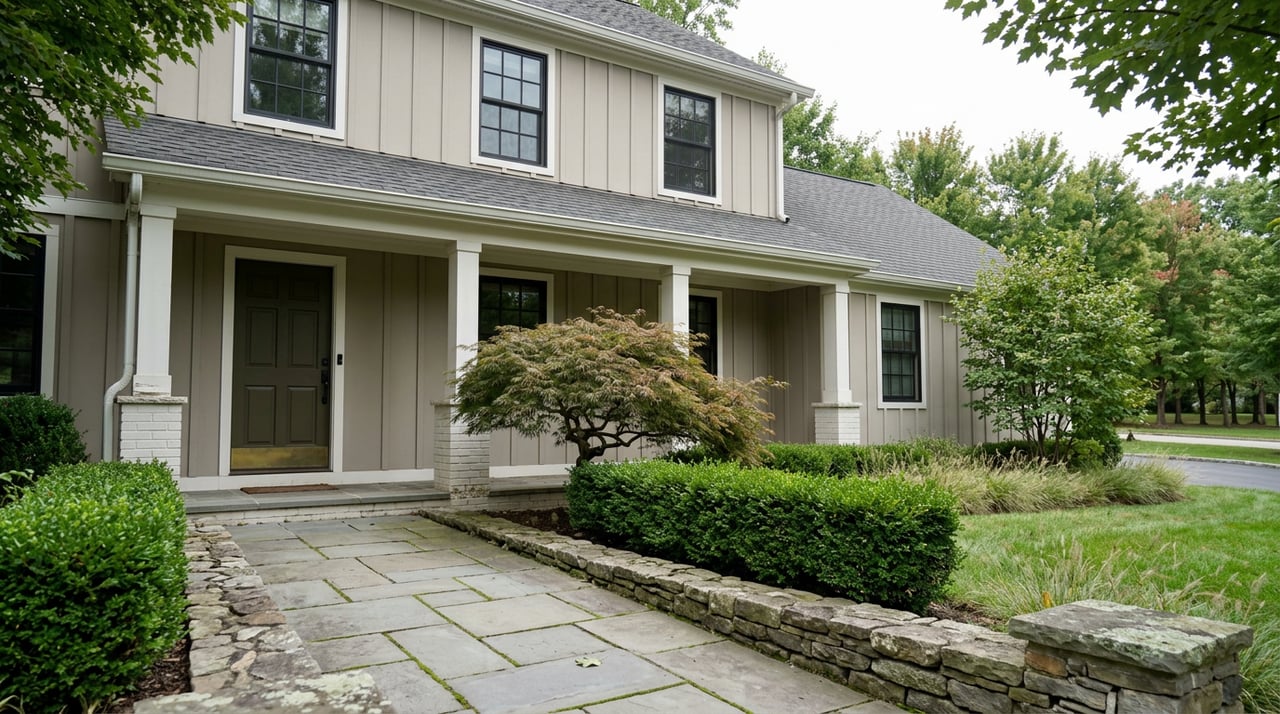
The Line Through Bethlehem That Decides What You Actually Pay In Property Taxes
September 3, 2026
September 3, 2026
Two rowhomes on the same Bethlehem street can be built the same year, appraise for the same price, and still owe property tax bills that differ by more than a thousand dollars a year. The gap has nothing to do with school quality, lot size, or how recently the roof was replaced. It comes down to a boundary that isn't marked by a fence, a sign, or anything you'd notice walking the block: the line where Northampton County ends and Lehigh County begins, which happens to run straight through the middle of the city.
If you're comparing homes anywhere near that line, the county on the deed matters more than most buyers assume.
Bethlehem is unusual among Pennsylvania cities in this specific way. Roughly two-thirds of the city sits in Northampton County and the remaining third sits in Lehigh County, and the city's own tax office is upfront about what that means: the two counties use different base years to determine assessed value, so the city has to set two different millage rates just to raise revenue evenly across both sides of town. For 2026, the city portion of the property tax bill is 6.21 mills for parcels in Lehigh County and 19.64 mills for parcels in Northampton County, a gap of more than three to one on the city line alone.
That gap isn't Bethlehem overcharging one side of town. It's a mechanical consequence of how each county values property in the first place.
Every year, the Pennsylvania Department of Revenue publishes a common level ratio factor for each county, a number that converts a property's assessed value into an estimate of its true market value. For documents accepted between July 2026 and June 2027, Northampton County's factor sits at 6.21, which means assessed values across the county run at roughly one-sixth of what homes are actually worth on the open market. Lehigh County reset its entire assessment roll to market value back in 2013 and has been frozen at that base year since, which puts its assessed values far closer to true market value than Northampton County's.
Put simply, Northampton County is taxing a much smaller slice of a home's real worth than Lehigh County is. To collect a comparable dollar amount, its millage rate has to run several times higher. It's not that Northampton is a more expensive place to own; it's that the assessed value on the tax bill and the price a home would actually sell for have drifted much further apart there than they have across the county line.
The Bethlehem Area School District's own numbers make the mechanism concrete. Under the board's 2025-26 budget, the district set its school millage at 19.42 mills for the Lehigh County portion of the city and 63.17 mills for the Northampton County portion, more than three times higher. But the average assessed value behind those rates tells the other half of the story: $142,700 for Lehigh County parcels versus just $62,500 for Northampton County parcels. The higher rate is largely offsetting a much lower assessment base, not taxing Northampton County homeowners at a genuinely higher share of what their homes are worth.
Here's how that plays out in real dollars for the average Bethlehem Area household on each side of the line:
| Lehigh County side | Northampton County side | |
|---|---|---|
| City millage (2026) | 6.21 | 19.64 |
| School millage (2025-26) | 19.42 | 63.17 |
| Average assessed value (BASD) | $142,700 | $62,500 |
| Average school tax bill (2025-26) | $2,771 | $3,948 |
A Northampton County homeowner in this example still pays a higher final bill, but the difference is far smaller than the millage rates alone would suggest, because the two assessment bases aren't measuring the same fraction of the same thing.
If you're weighing two homes on opposite sides of Bethlehem's county line, or anywhere near it, the millage rate printed on a listing sheet isn't the number that matters. A few things are:
Two dates are worth keeping on a calendar if you're closing near the county line. Pennsylvania's standard deadline to file an assessment appeal is August 1 in both Northampton and Lehigh counties, and the homestead and farmstead exclusion application, which reduces the assessed value a home is taxed on, is due by March 1 through the county assessment office. Miss either window and you're waiting a full year for the next one.
Bethlehem's county line is the most dramatic version of this, but it's not the only place in Northampton County where the headline number hides more than it reveals. The county's own current millage sheet shows combined municipal-and-school totals that swing widely from borough to borough: Hellertown runs close to 89 combined mills, Nazareth sits near 89.25, Northampton borough is close to 86.82, and Bath comes in around 86.77. None of those totals would show up if you only looked at a countywide average, and none of them mean the same thing from one municipality to the next once you factor in how far each one's assessed values sit from true market value.
We've written before about how the county median hides three different markets when it comes to price. The tax bill attached to that price hides just as much, and the reasons are almost never obvious from a listing photo.
None of this is a reason to prefer one side of Bethlehem over the other. It's a reason to ask for the actual current tax bill on a specific parcel before you fall for a listing based on its assessed value or its millage rate alone. The county line running through the middle of the city means those two numbers can point in opposite directions depending on which side of the street you're standing on.
If you're comparing homes anywhere in Northampton County, including the parts of Bethlehem that sit on either side of that line, The Cronmiller Team can pull the real numbers on a specific address before you make an offer. Start with a Get a Free Home Valuation request and we'll walk you through what a property's assessed value, exclusions, and current bill actually add up to.
Does the higher millage rate on the Northampton County side mean I'll definitely pay more in taxes than an identical home in Lehigh County? Not automatically. Because Northampton County's assessed values run at a much smaller fraction of true market value than Lehigh County's do, a much higher rate can still land on a comparable or only moderately higher final bill. The only way to know is to look at the actual dollar total, not the rate.
Will buying a home in Bethlehem trigger a reassessment? Pennsylvania does not require a reassessment simply because a property changes hands, so the existing assessed value and millage typically carry over to a new owner. The one exception is a sale price well above what the assessed value implies for market value, which can prompt the school district to file an assessment appeal of its own.
Is there a deadline to apply for a homestead exclusion after I buy in Northampton County? Yes. The homestead and farmstead exclusion, which reduces the assessed value a home is taxed on, needs to be filed with the county assessment office by March 1 to apply for that tax year.
Stay up to date on the latest real estate trends.
We are a team of dedicated real estate professionals, bringing extensive experience and a genuine passion to help clients find their dream homes. With a deep understanding of the local market and a meticulous eye for detail, we have established a strong reputation as trusted advisors in the real estate industry. Our seasoned team is uniquely positioned to guide clients through property transactions, ensuring success tailored to individual needs. We take pride in fostering lasting relationships and being a go-to resource for unparalleled support in achieving homeownership aspirations.